
The Organized Work Environment: Rethinking the Desktop for the Age of AI
From managing applications and information to maintaining the meaning and continuity of our work.
The desktop was built around tools, not work
Think about what happens when you're working on something important, like launching a new product. You might have a plan in one application, research in a browser, conversations with colleagues, and an AI assistant helping you explore ideas.
Each tool helps with part of the job. But you're still responsible for keeping track of how everything fits together. You remember what's been decided, which questions remain open, and what needs to happen next.
The graphical desktop changed computing by making applications, files, and information easier to use. But it wasn't designed to help us maintain an understanding of our work as it unfolds across those tools.
As AI becomes part of more of our activities, this limitation matters even more. We need an environment that helps us manage not just the tools we use, but the work we're trying to accomplish.
The work is more than the things we create
A product launch is more than a collection of documents, tasks, and conversations. There's a goal we're trying to achieve. There are questions to answer, options to consider, decisions to make, and responsibilities to fulfill.
These things are connected. A decision may change the plan. New research may challenge an earlier assumption. A commitment may depend on someone else's work.
We spend a surprising amount of time maintaining these connections, often in our heads. And when we step away, switch applications, or bring someone new into the effort, we have to rebuild much of that understanding.
This is the difference between doing the work and coordinating the work. Our tools are good at helping us do things. They're less effective at helping us maintain the understanding that connects those activities.
A new way to organize computing
An Organized Work Environment (OWE) is a proposed next generation of interactive computing environments designed around ongoing work rather than individual applications.
Instead of treating documents, conversations, and activities as unrelated pieces of information, an OWE helps us see how they contribute to what we're trying to accomplish.
Imagine returning to that product launch. You could see the goal, the decisions already made, the questions still unresolved, and the materials related to each. You could explore those connections, change direction, or pick up where you left off.
The familiar tools would still be there. An OWE wouldn't need to replace applications, files, or windows. It would extend the desktop by making the purpose and coordination of our work easier to understand and manage.
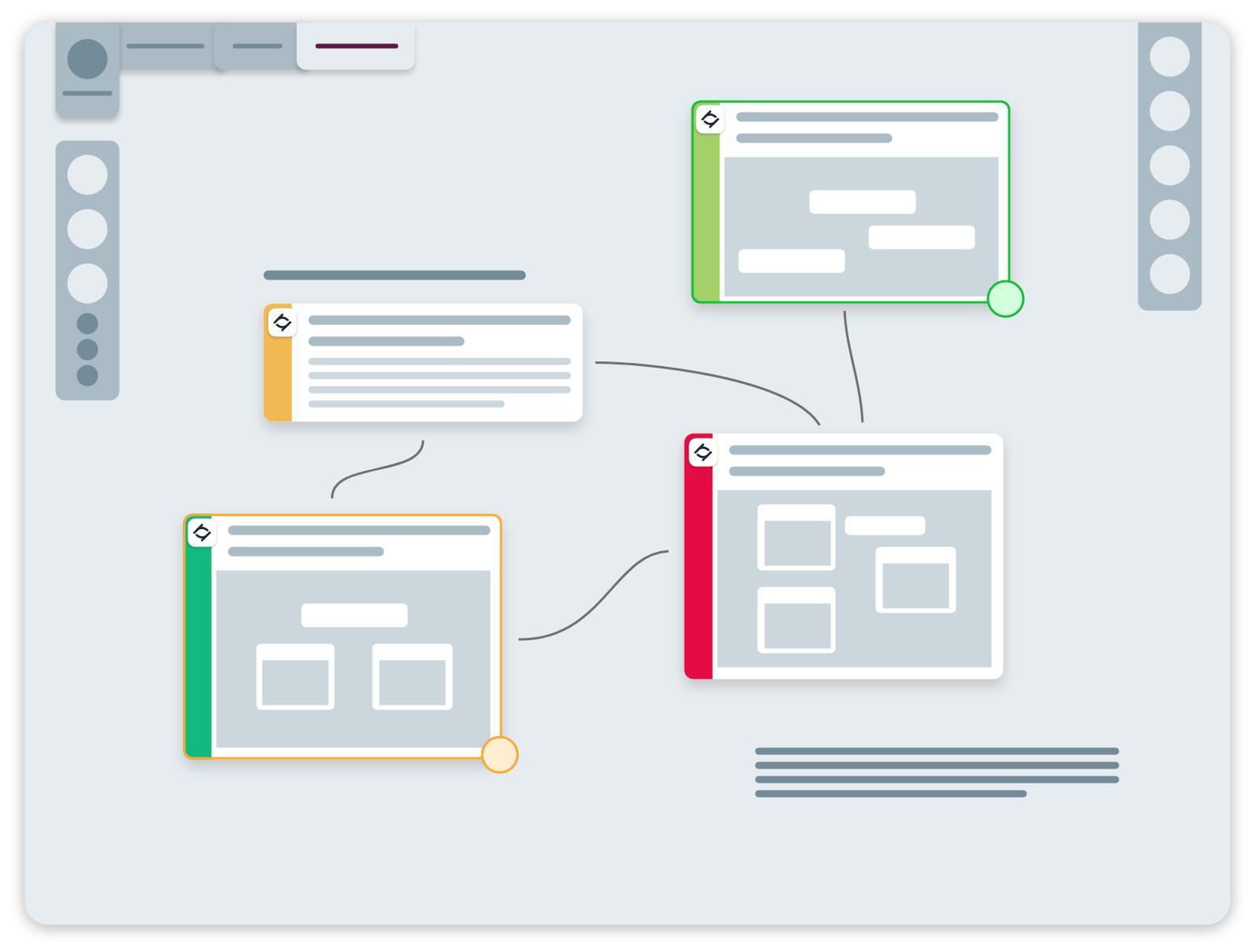
An Organized Work Environment connects the tools and information we use to the ongoing work they support.
AI makes a different kind of interaction possible
There's an obvious challenge with this idea. If an OWE requires us to constantly organize goals, decisions, and tasks by hand, it could become just another system we have to maintain.
AI offers a different approach.
As we work, AI can help recognize what we're focused on, notice changes, and identify questions that may need attention. It can suggest ways to clarify our intentions or organize what we've learned.
For example, suppose you're discussing the product launch with an AI assistant. You mention that the launch date may need to change because a security review isn't complete.
Rather than simply adding another message to the conversation, the AI could suggest recording the security review as an unresolved issue affecting the launch.
You could accept that suggestion, correct it, or continue exploring. The important distinction is that the AI offers an interpretation, but you decide what becomes established.
We call the act of making that meaning explicit articulation. It might be as simple as confirming a decision, clarifying a goal, or marking an idea as worth keeping.
An OWE aims to make these small actions a natural part of working. Over time, they build an understanding that can be revisited, corrected, and carried forward.
AI should help us stay organized because we're working, not require us to get organized before it can help.
One person or many, the need is the same
We often think of coordination as something that happens between people. But we also coordinate with ourselves over time.
What we planned yesterday may change after what we learn today. An OWE could help us maintain that continuity, even as our priorities and understanding evolve.
The same idea extends to working with AI. An assistant might help us stay focused, while another agent carries out research or prepares a document. Their contributions should connect to the same ongoing effort, rather than remain isolated in separate conversations.
When other people join, they too should be able to understand the relevant goals, decisions, and commitments without starting from scratch.
Whether we're working alone, with colleagues, or with AI agents, the underlying need is the same: the work should retain its meaning as activities and participants change.
An open foundation for the next generation of computing
For this vision to work across different tools and systems, the coordination of our work cannot belong exclusively to any one application or AI provider.
That is why Reframe is developing the Agents Shared Cognition Protocol (ASCP).
ASCP is a proposed open protocol for representing and sharing the decisions, commitments, responsibilities, and relationships that give ongoing work its meaning. It is designed to preserve who established something, how it relates to other parts of the work, and how that understanding changes over time.
An OWE provides a new way for people to experience and interact with their work. ASCP provides a common foundation through which independent applications and agents could participate in that coordination.
Neither concept needs to belong to a single product. Different developers could build different Organized Work Environments, and other applications could support ASCP without becoming OWEs themselves.
Reframe is pursuing this approach because we believe the next evolution of computing will require both: a more natural way to interact with our work and an open way to preserve its continuity.
The next generation of computing won't just help us do work. It will help us maintain an understanding of what we're doing, why we're doing it, and what we've agreed to do next.
Explore Further
- AI Needs a Place to Work — How AI participates in ongoing work.
- The Work Persists. The Agents Come and Go. — Why coordination should outlast individual agents.
- ASCP Draft Specifications — Explore Reframe's proposed open protocol.